Docent Script ゴスペル漢字案内人スクリプト
The Kanji for Judgment 裁
- Let me show you something interesting.
- The Bible tells us that God created the first man and the first woman, Adam and Eve.
- Every one of us are the descendants of these two people.
- And God placed them in the Garden of Eden.
- He gave them one command: they were free to eat from every tree except one, the tree of the knowledge of good and evil.
- But they desired that knowledge for themselves. They disobeyed God and ate the fruit.
- At that moment they came to know good and evil. Sin entered the world, and mankind's relationship with God was broken.
- Have you ever wondered what that knowledge of good and evil actually looks like?
- The Bible answers that question in a surprising way.
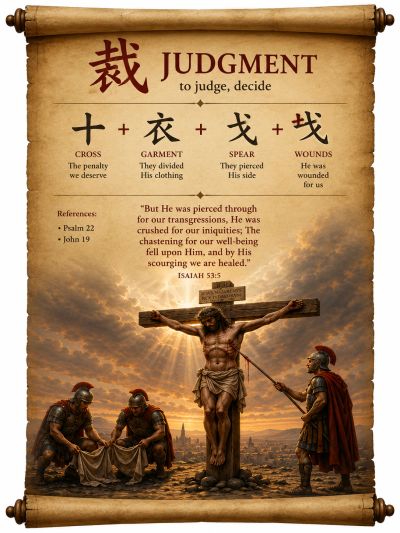
- I'd like to show you through the kanji for judgment 裁 that falls on people.
- We begin by drawing a cross 十.
- This is the cross where Jesus Christ was crucified.
- Next we draw the long horizontal line beneath it.
- This represents the earth.
- Jesus did not die in a legend or a myth.
- He died here on earth at a specific place and at a specific moment in history.
- Next we write the part that means garment 衣.
- As Jesus hung on the cross, the Roman soldiers divided His clothing and cast lots for His garments, just as the Scriptures foretold.
- At that moment, Jesus prayed, "Father, forgive them, for they do not know what they are doing."
- Finally, we write the spear 戈.
- After Jesus had died, a Roman soldier pierced His side with a spear to confirm that He was dead.
- Now look closely.
- If we cover the part that means garment 衣, another character appears.
- What remains is a character meaning a violent wound 𢦏.
- When I look at this kanji through the story of John chapter 19, I see the knowledge of good and evil more clearly than anywhere else in the Bible.
- I see the greatest evil mankind has ever committed.
- Human beings rejected the Son of God, mocked Him, nailed Him to a cross, gambled for His clothing, and pierced His side with a spear.
- Yet at that very same moment, I also see the greatest good God has ever accomplished.
- God placed the judgment that our sins deserved upon His own Son so that we could be forgiven and restored to Him.
- The cross shows us both the depth of human sin and the greatness of God's love.
- Every time I write the kanji 裁, I remember that what appeared to be history's greatest tragedy became God's greatest gift.
- That is why this kanji always reminds me of the Gospel.
裁(さばき)の漢字
- ちょっと面白いものをお見せしますね。
- 聖書は、神が最初の人アダムと最初の女エバを創造されたと教えています。
- 私たち人類はみな、この二人の子孫です。
- 神はアダムとエバをエデンの園に置かれました。
- そして、ただ一つの命令を与えられました。「善悪の知識の木だけは食べてはいけない。ほかの木からは自由に食べてよい。」
- しかし、アダムとエバは自分たちも善悪を知りたいと思い、神に従わず、その実を食べてしまいました。
- その瞬間、二人は善と悪を知るようになりました。罪が世界に入り、人と神との関係は壊れてしまいました。
- では、善悪を知るとは、実際にはどういうことなのでしょうか。
- 聖書は、その問いに驚くべき方法で答えています。
- 今日は、「人をさばく」の「裁」という漢字を通して、その答えをご紹介したいと思います。
- まず、十字架を書きます。
- これは、イエス・キリストがかけられた十字架です。
- 次に、その下に長い横線を書きます。
- この線は地上を表しています。
- イエスは伝説や神話の中で死なれたのではありません。
- 歴史の中のある時、この地上で、本当に十字架にかけられたのです。
- 次に、「衣」の部分を書きます。
- イエスが十字架にかけられていたとき、ローマ兵たちは聖書の預言のとおり、イエスの衣服を分け合い、その衣のためにくじを引きました。
- その間、イエスはこう祈られました。「父よ。彼らをお赦しください。彼らは、自分が何をしているのか分かっていないのです。」
- 最後に、槍を書きます。
- イエスが息を引き取られた後、一人のローマ兵が、その死を確かめるために槍でその脇を突き刺しました。
- ここで、よく見てください。
- もし「衣」の部分を隠してみると、別の漢字が現れます。
- 残るのは、「激しい傷」を表す漢字です。
- 私はこの漢字を見るたびに、ヨハネの福音書19章を思い出します。そして、善悪の知識とは何かが、聖書のどの場面よりもはっきりと見えてくるのです。
- ここには、人類がこれまでに犯した最も大きな悪があります。
- 人々は神の御子を拒み、あざけり、十字架につけ、その衣のためにくじを引き、最後には槍でその脇を突き刺しました。
- しかし、まさにその同じ瞬間、私は神が成し遂げられた最も大きな善を見るのです。
- 神は、私たちが受けるべき裁きを、ご自分の御子に負わせてくださいました。それは、私たちが罪を赦され、再び神との関係を回復することができるためです。
- 十字架は、人間の罪の深さと、神の愛の偉大さの両方を私たちに示しています。
- 私は「裁」という漢字を書くたびに、歴史上最大の悲劇と思われた出来事が、神の最も大きな贈り物となったことを思い出します。
- だからこそ、この漢字はいつも私に福音を思い出させてくれるのです。
裁(さばき)の漢字
- ちょっと面白いものをお見せしますね。
- ちょっと ➞ a little (used here as a friendly softener)
- 面白い ➞ おもしろい ➞ interesting; fascinating; engaging
- もの ➞ thing; something
- お見せします ➞ おみせします ➞ I will show you (polite)
- ね ➞ sentence-ending particle inviting agreement or shared attention
- 聖書は、神が最初の人アダムと最初の女エバを創造されたと教えています。
- 聖書 ➞ せいしょ ➞ Bible
- 神 ➞ かみ ➞ God
- 最初 ➞ さいしょ ➞ first
- 人 ➞ ひと ➞ person; man
- 女 ➞ おんな ➞ woman
- 創造された ➞ そうぞうされた ➞ was created
- 教えています ➞ おしえています ➞ teaches
- 私たち人類はみな、この二人の子孫です。
- 私たち ➞ わたしたち ➞ we; us
- 人類 ➞ じんるい ➞ humanity; mankind
- みな ➞ everyone; all
- 二人 ➞ ふたり ➞ two people
- 子孫 ➞ しそん ➞ descendants
- 神はアダムとエバをエデンの園に置かれました。
- 神 ➞ かみ ➞ God
- 園 ➞ その ➞ garden
- 置かれました ➞ おかれました ➞ placed
- そして、ただ一つの命令を与えられました。「善悪の知識の木だけは食べてはいけない。ほかの木からは自由に食べてよい。」
- そして ➞ and; then
- ただ ➞ only; just
- 一つ ➞ ひとつ ➞ one
- 命令 ➞ めいれい ➞ command
- 与えられました ➞ あたえられました ➞ was given
- 善悪 ➞ ぜんあく ➞ good and evil
- 知識 ➞ ちしき ➞ knowledge
- 木 ➞ き ➞ tree
- だけ ➞ only
- 食べてはいけない ➞ たべてはいけない ➞ must not eat
- ほか ➞ other
- 木 ➞ き ➞ tree
- 自由に ➞ じゆうに ➞ freely
- 食べてよい ➞ たべてよい ➞ may eat; are free to eat
- しかし、アダムとエバは自分たちも善悪を知りたいと思い、神に従わず、その実を食べてしまいました。
- しかし ➞ however; but
- 自分たち ➞ じぶんたち ➞ themselves
- 善悪 ➞ ぜんあく ➞ good and evil
- 知りたい ➞ しりたい ➞ wanted to know
- 思い ➞ おもい ➞ thought; desired
- 神 ➞ かみ ➞ God
- 従わず ➞ したがわず ➞ without obeying
- 実 ➞ み ➞ fruit
- 食べてしまいました ➞ たべてしまいました ➞ ended up eating; ate (with the nuance of an
- irreversible action)
- その瞬間、二人は善と悪を知るようになりました。罪が世界に入り、人と神との関係は壊れてしまいました。
- その瞬間 ➞ そのしゅんかん ➞ at that moment
- 二人 ➞ ふたり ➞ the two people
- 善 ➞ ぜん ➞ good
- 悪 ➞ あく ➞ evil
- 知る ➞ しる ➞ to know
- 〜ようになりました ➞ came to; became able to
- 罪 ➞ つみ ➞ sin
- 世界 ➞ せかい ➞ world
- 入り ➞ はいり ➞ entered
- 人 ➞ ひと ➞ mankind; people
- 神 ➞ かみ ➞ God
- 関係 ➞ かんけい ➞ relationship
- 壊れてしまいました ➞ こわれてしまいました ➞ was broken completely
- では、善悪を知るとは、実際にはどういうことなのでしょうか。
- では ➞ well then; now then
- 善悪 ➞ ぜんあく ➞ good and evil
- 知る ➞ しる ➞ to know
- 〜とは ➞ as for...; what does ... mean?
- 実際には ➞ じっさいには ➞ in reality; actually
- どういうこと ➞ what does it mean?; what is it really?
- なのでしょうか ➞ polite expression meaning "I wonder..." or "what could it be?"
- 聖書は、その問いに驚くべき方法で答えています。
- 聖書 ➞ せいしょ ➞ Bible
- 問い ➞ とい ➞ question
- 驚くべき ➞ おどろくべき ➞ astonishing; surprising
- 方法 ➞ ほうほう ➞ way; method
- 答えています ➞ こたえています ➞ answers
- 今日は、「人をさばく」の「裁」という漢字を通して、その答えをご紹介したいと思います。
- 今日 ➞ きょう ➞ today
- 人 ➞ ひと ➞ person
- さばく(裁く) ➞ to judge
- 裁 ➞ さばき/さい ➞ judgment; to judge
- 漢字 ➞ かんじ ➞ kanji; Chinese character
- 通して ➞ とおして ➞ through
- 答え ➞ こたえ ➞ answer
- ご紹介したいと思います ➞ ごしょうかいしたいとおもいます ➞ I would like to introduce
- まず、十字架を書きます。
- まず ➞ first
- 十字架 ➞ じゅうじか ➞ cross
- 書きます ➞ かきます ➞ write; draw
- これは、イエス・キリストがかけられた十字架です。
- これ ➞ this
- イエス・キリスト ➞ Jesus Christ
- かけられた ➞ was hung; was crucified (literally "was placed on")
- 十字架 ➞ じゅうじか ➞ cross
- 次に、その下に長い横線を書きます。
- 次に ➞ つぎに ➞ next
- 下 ➞ した ➞ below; underneath
- 長い ➞ ながい ➞ long
- 横線 ➞ よこせん ➞ horizontal line
- 書きます ➞ かきます ➞ write; draw
- この線は地上を表しています。
- この ➞ this
- 線 ➞ せん ➞ line
- 地上 ➞ ちじょう ➞ the earth; the world
- 表しています ➞ あらわしています ➞ represents; expresses
- イエスは伝説や神話の中で死なれたのではありません。
- イエス ➞ Jesus
- 伝説 ➞ でんせつ ➞ legend
- 神話 ➞ しんわ ➞ myth
- 〜の中で ➞ in; within
- 死なれた ➞ しなれた ➞ died (honorific)
- 〜のではありません ➞ is not; did not
- 歴史の中のある時、この地上で、本当に十字架にかけられたのです。
- 歴史 ➞ れきし ➞ history
- ある時 ➞ あるとき ➞ at a certain time
- 地上 ➞ ちじょう ➞ the earth
- 本当に ➞ ほんとうに ➞ truly; really
- 十字架にかけられた ➞ じゅうじかにかけられた ➞ was crucified
- 〜のです ➞ explanatory ending ("This is the reality.")
- 次に、「衣」の部分を書きます。
- 次に ➞ つぎに ➞ next
- 衣 ➞ ころも ➞ garment; clothing
- 部分 ➞ ぶぶん ➞ part; section
- 書きます ➞ かきます ➞ write; draw
- イエスが十字架にかけられていたとき、ローマ兵たちは聖書の預言のとおり、イエスの衣服を分け合い、その衣のためにくじを引きました。
- イエス ➞ Jesus
- 十字架にかけられていた ➞ じゅうじかにかけられていた ➞ was hanging on the cross
- とき ➞ when
- ローマ兵 ➞ ローマへい ➞ Roman soldiers
- 聖書 ➞ せいしょ ➞ Bible
- 預言 ➞ よげん ➞ prophecy
- 〜のとおり ➞ just as; according to
- 衣服 ➞ いふく ➞ clothing; garments
- 分け合い ➞ わけあい ➞ divided among themselves
- 衣 ➞ ころも ➞ garment
- くじを引きました ➞ くじをひきました ➞ cast lots
- その間、イエスはこう祈られました。「父よ。彼らをお赦しください。彼らは、自分が何をしているのか分かっていないのです。」
- その間 ➞ そのあいだ ➞ meanwhile; during that time
- イエス ➞ Jesus
- こう ➞ like this; these words
- 祈られました ➞ いのられました ➞ prayed
- 父 ➞ ちち ➞ Father
- 彼ら ➞ かれら ➞ they; them
- お赦しください ➞ おゆるしください ➞ please forgive
- 自分 ➞ じぶん ➞ oneself
- 何 ➞ なに ➞ what
- している ➞ している ➞ are doing
- 分かっていない ➞ わかっていない ➞ do not understand; do not know
- 最後に、槍を書きます。
- 最後に ➞ さいごに ➞ finally
- 槍 ➞ やり ➞ spear
- 書きます ➞ かきます ➞ write; draw
- イエスが息を引き取られた後、一人のローマ兵が、その死を確かめるために槍でその脇を突き刺しました。
- 息を引き取られた ➞ いきをひきとられた ➞ breathed His last; died
- 後 ➞ あと ➞ after
- 一人 ➞ ひとり ➞ one person
- ローマ兵 ➞ ローマへい ➞ Roman soldier
- 死 ➞ し ➞ death
- 確かめる ➞ たしかめる ➞ to confirm
- ために ➞ for the purpose of
- 槍 ➞ やり ➞ spear
- 脇 ➞ わき ➞ side (of the body)
- 突き刺しました ➞ つきさしました ➞ pierced; thrust into
- ここで、よく見てください。
- ここで ➞ here; at this point
- よく ➞ carefully; closely
- 見てください ➞ みてください ➞ please look
- もし「衣」の部分を隠してみると、別の漢字が現れます。
- もし ➞ if
- 衣 ➞ ころも ➞ garment
- 部分 ➞ ぶぶん ➞ part; section
- 隠してみる ➞ かくしてみる ➞ try covering
- 別の ➞ べつの ➞ another; different
- 漢字 ➞ かんじ ➞ kanji
- 現れます ➞ あらわれます ➞ appears
- 残るのは、「激しい傷」を表す漢字です。
- 残る ➞ のこる ➞ to remain
- 激しい ➞ はげしい ➞ severe; violent
- 傷 ➞ きず ➞ wound
- 表す ➞ あらわす ➞ to represent; to express
- 漢字 ➞ かんじ ➞ kanji
- 私はこの漢字を見るたびに、ヨハネの福音書19章を思い出します。そして、善悪の知識とは何かが、聖書のどの場面よりもはっきりと見えてくるのです。
- 私 ➞ わたし ➞ I
- この ➞ this
- 漢字 ➞ かんじ ➞ kanji
- 見るたびに ➞ みるたびに ➞ every time I see
- ヨハネの福音書 ➞ ヨハネのふくいんしょ ➞ Gospel of John
- 19章 ➞ じゅうきゅうしょう ➞ chapter 19
- 思い出します ➞ おもいだします ➞ remember; am reminded of
- そして ➞ and
- 善悪 ➞ ぜんあく ➞ good and evil
- 知識 ➞ ちしき ➞ knowledge
- とは何か ➞ とはなにか ➞ what it is
- 聖書 ➞ せいしょ ➞ Bible
- どの場面よりも ➞ どのばめんよりも ➞ more clearly than anywhere else (lit. than any scene)
- はっきりと ➞ clearly
- 見えてくる ➞ みえてくる ➞ comes into view; becomes clear
- ここには、人類がこれまでに犯した最も大きな悪があります。
- ここには ➞ here; in this place
- 人類 ➞ じんるい ➞ humanity; mankind
- これまでに ➞ until now; in all of history
- 犯した ➞ おかした ➞ committed
- 最も ➞ もっとも ➞ the most
- 大きな ➞ おおきな ➞ great; great in magnitude
- 悪 ➞ あく ➞ evil
- あります ➞ there is
- 人々は神の御子を拒み、あざけり、十字架につけ、その衣のためにくじを引き、最後には槍でその脇を突き刺しました。
- 人々 ➞ ひとびと ➞ people
- 神 ➞ かみ ➞ God
- 御子 ➞ みこ ➞ the Son (of God)
- 拒み ➞ こばみ ➞ rejected
- あざけり ➞ mocked; ridiculed
- 十字架につけ ➞ じゅうじかにつけ ➞ crucified
- 衣 ➞ ころも ➞ garment
- くじを引き ➞ くじをひき ➞ cast lots
- 最後には ➞ さいごには ➞ finally
- 槍 ➞ やり ➞ spear
- 脇 ➞ わき ➞ side
- 突き刺しました ➞ つきさしました ➞ pierced
- しかし、まさにその同じ瞬間、私は神が成し遂げられた最も大きな善を見るのです。
- しかし ➞ however; yet
- まさに ➞ exactly; precisely
- 同じ ➞ おなじ ➞ same
- 瞬間 ➞ しゅんかん ➞ moment
- 私 ➞ わたし ➞ I
- 神 ➞ かみ ➞ God
- 成し遂げられた ➞ なしとげられた ➞ accomplished
- 最も ➞ もっとも ➞ the greatest
- 善 ➞ ぜん ➞ good
- 見る ➞ みる ➞ see
- 神は、私たちが受けるべき裁きを、ご自分の御子に負わせてくださいました。それは、私たちが罪を赦され、再び神との関係を回復することができるためです。
- 神 ➞ かみ ➞ God
- 私たち ➞ わたしたち ➞ we; us
- 受けるべき ➞ うけるべき ➞ deserved; ought to receive
- 裁き ➞ さばき ➞ judgment
- ご自分 ➞ ごじぶん ➞ His own
- 御子 ➞ みこ ➞ Son (of God)
- 負わせてくださいました ➞ おわせてくださいました ➞ caused to bear; laid upon
- それは ➞ that is because
- 私たち ➞ わたしたち ➞ we; us
- 罪 ➞ つみ ➞ sin
- 赦され ➞ ゆるされ ➞ be forgiven
- 再び ➞ ふたたび ➞ again
- 神 ➞ かみ ➞ God
- 関係 ➞ かんけい ➞ relationship
- 回復する ➞ かいふくする ➞ restore
- ことができる ➞ can; be able to
- ためです ➞ for this reason
- 十字架は、人間の罪の深さと、神の愛の偉大さの両方を私たちに示しています。
- 十字架 ➞ じゅうじか ➞ cross
- 人間 ➞ にんげん ➞ mankind; human beings
- 罪 ➞ つみ ➞ sin
- 深さ ➞ ふかさ ➞ depth
- 神 ➞ かみ ➞ God
- 愛 ➞ あい ➞ love
- 偉大さ ➞ いだいさ ➞ greatness
- 両方 ➞ りょうほう ➞ both
- 私たち ➞ わたしたち ➞ we; us
- 示しています ➞ しめしています ➞ shows; demonstrates
- 私は「裁」という漢字を書くたびに、歴史上最大の悲劇と思われた出来事が、神の最も大きな贈り物となったことを思い出します。
- 私 ➞ わたし ➞ I
- 裁 ➞ さばき/さい ➞ judgment
- 漢字 ➞ かんじ ➞ kanji
- 書くたびに ➞ かくたびに ➞ every time I write
- 歴史上 ➞ れきしじょう ➞ in history; in all of history
- 最大 ➞ さいだい ➞ greatest; largest
- 悲劇 ➞ ひげき ➞ tragedy
- 思われた ➞ おもわれた ➞ appeared to be; was thought to be
- 出来事 ➞ できごと ➞ event
- 神 ➞ かみ ➞ God
- 最も ➞ もっとも ➞ greatest
- 大きな ➞ おおきな ➞ great
- 贈り物 ➞ おくりもの ➞ gift
- 思い出します ➞ おもいだします ➞ remember; am reminded
- だからこそ、この漢字はいつも私に福音を思い出させてくれるのです。
- だからこそ ➞ for that very reason
- この ➞ this
- 漢字 ➞ かんじ ➞ kanji
- いつも ➞ always
- 私 ➞ わたし ➞ me
- 福音 ➞ ふくいん ➞ the Gospel
- 思い出させてくれる ➞ おもいださせてくれる ➞ reminds me